
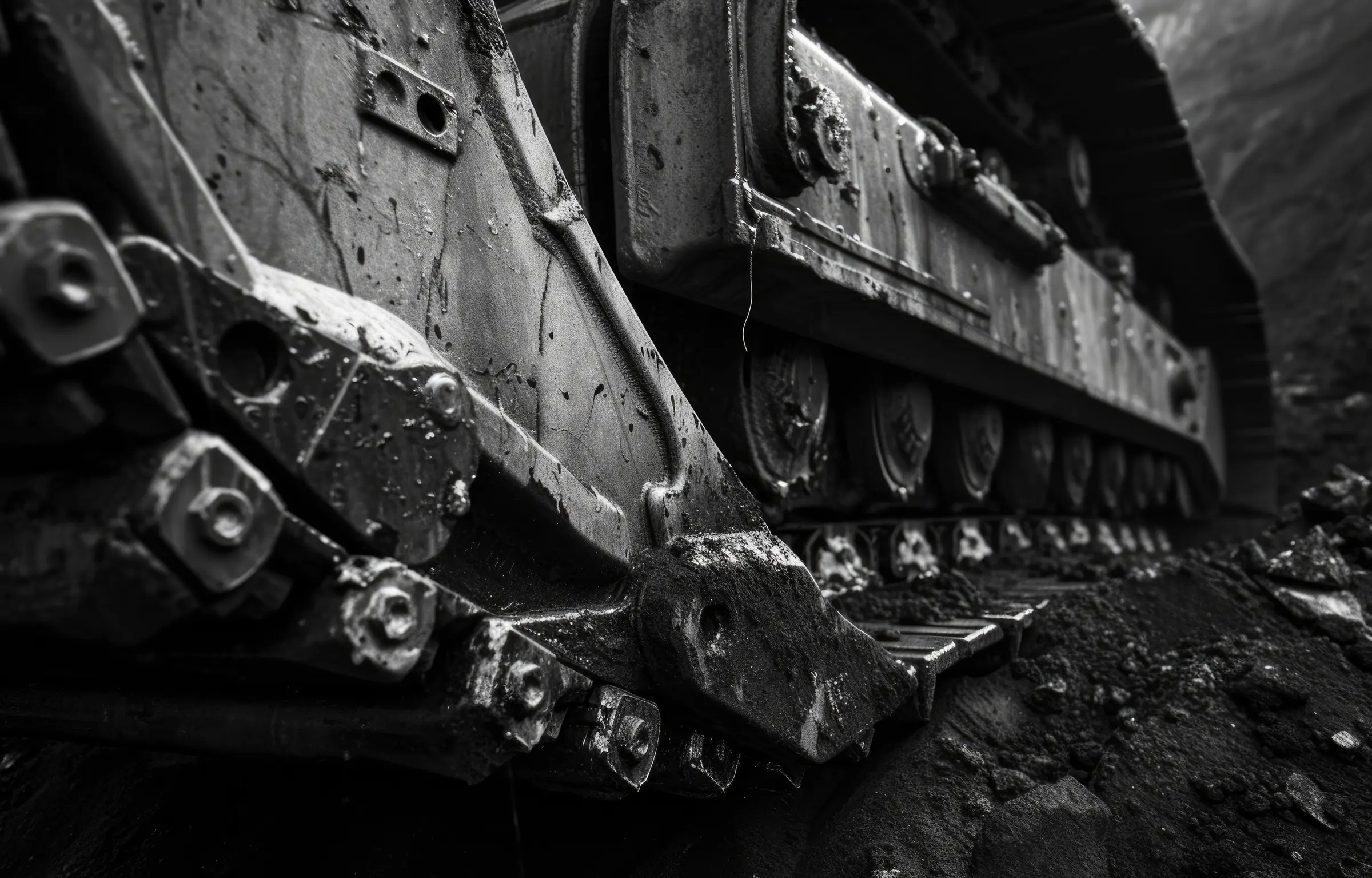
An excavator undercarriage distributes machine weight, transmits motion and guides the track under continuous cyclic load. Because crawler belts, tumblers, idlers and rollers operate as one system, unusual wear on a single element can reveal a broader alignment, tension or load-distribution condition.
Read the system, not only the worn part
The tumbler engages the track links to propel the machine. The front idler guides the track and maintains tension. Carrier rollers support the upper track section, while track rollers carry machine weight and transfer it to the ground. Wear should therefore be compared across contact paths, left and right sides, and adjacent components.
Contact surfaces need controlled properties
STRUMEX tumblers use alloy steel with induction-hardened tooth contact surfaces, while idlers use high-strength alloy steel with through-hardening or quenched-and-tempered treatment. Catalogue specifications set tumbler tooth and roller-path hardness, idler roller-path hardness and roller tread hardness at 48–55 HRC, matched with a tougher supporting core.
Sealing and lubrication also affect wear
Rollers use floating metal-face seals and an independent grease reservoir to limit the entry of mud and water into internal mating areas. An external tread can remain serviceable while contamination is already accelerating internal wear, so leakage, seal condition and lubricant retention should be reviewed together with visible surface loss.
Turn inspection into a repeatable record
Record track tension, side loading, operating terrain and measured wear at consistent intervals. Dimensional checks and photographs taken from the same positions help identify whether the rate is stable or accelerating. This system-level record makes it easier to distinguish normal consumption from a condition that may shorten the life of the next replacement set.